Net Revenue: How it Differs from Gross Revenue and Net Income
.jpg?width=88&height=88&name=PORTRAIT_Baptiste%20(1).jpg)
Baptiste Jourdan
Publié le 11.02.22
Mis à jour le 12.02.26
4 min
TL;DR: Revenue Metrics Explained
- Gross Revenue → Total money from sales before any deductions (the "top line")
- Net Revenue → Gross revenue minus returns, discounts, and refunds (what you actually keep from sales)
- Net Income → Net revenue minus all business expenses (the "bottom line" = actual profit)
- Key rule: Track all three — gross shows sales power, net revenue shows sales efficiency, net income shows true profitability
You measure your business's profits and revenue with a variety of metrics. Net income, gross revenue, and net revenue are common metrics for assessing the financial health of your company.
But how do these measurements differ, and which one reveals the most about your business? Each metric serves a distinct purpose, so understanding their significance helps you make informed strategic decisions.
Gross vs. Net: The Fundamental Difference
An item's gross value is the whole amount, while its net value refers to what remains after deductions. A business with $5 million in revenue and $1 million in expenses has $5 million in gross revenue and $4 million in net income.
Several items on the financial statements are referred to as gross:
- Gross Revenue — Revenue before deducting any items such as returns and refunds
- Gross Assets — Total assets minus any deductions
- Gross Margin — Gross profit divided by revenue, shown as a percentage
Financial statements show net items such as:
- Net Assets — An asset's value after certain liabilities have been subtracted
- Net Earnings — The remaining amount after all expenses are deducted from revenues
- Net Margin — Net income divided by revenue to show net income as a percentage of revenue
Revenue vs. Income: What's the Difference?
A business' revenue is the total amount of money it earns from its sales of goods and services. Since it is added to the top of the income statement, it is also referred to as the top line.
A business' revenue is the cash it generates before deducting its expenses. It shows how well a business can generate sales, but it doesn't take into account operating efficiencies, which can affect the bottom line. Top-line growth refers to a company's increase in revenue or gross sales.
The term income, whether gross or net, refers to a company's total profit or earnings. Whenever analysts and investors talk about a company's income, they are referring to the company's net income or profit. In some cases, the terms income and revenue are synonymous; however, net income represents a person's total earnings after subtracting any other incomes and expenses.
Let’s consider the following revenue vs. income example:

Apple reported revenue of $260 billion in 2019. That represents a 2% drop year-over-year. The company also posted $55.3 billion in net income for the same period, a decrease of 7% from the previous year.
Based on the above, it can be seen that Apple's net income is lower than its total revenue. This is because the net income includes the expenses Apple incurred during that period. This example clearly shows the difference between revenue and income when referring to the financials of a business.
Comparing Gross Revenue, Net Revenue and Net Income
A business should always know how successful it is at any given time. As a result of this, businesses should evaluate their profitability as well as their ability to control expenses. A business must also know the costs associated with doing business, such as the cost of goods sold, employee payroll, rent, utility bills, and office supplies.
Understanding Each Metric's Purpose
In most cases, investors are more interested in a company's gross revenue because it demonstrates its ability to generate sales and its potential for growth. For new SaaS offerings, tracking your gross revenue will be extremely important to determine the viability of your new subscription service.
Net revenue reveals sales quality and efficiency. If you're offering aggressive discounts to boost gross revenue, your net revenue might not reflect strong growth at all. This metric is crucial when comparing financial performance over time, analyzing the impact of promotional campaigns, and determining actual profit from core operations.
Net income shows true profitability. It tells whether your business is sustainable after covering all obligations. Even with strong revenue, poor expense management can turn a seemingly successful business into an unprofitable one.
Why Track All Three?
It is crucial to track them all for strategic and operational decision-making. Businesses can know where most of their money is spent with a proper understanding of these three metrics. By reducing unnecessary costs, businesses can increase profitability.
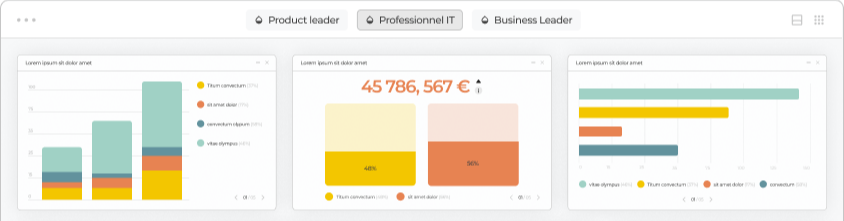
The best way to track and monitor these metrics is with a powerful analytic solution that provides easy-to-understand SaaS dashboards and analytics.
Common Mistakes When Tracking Revenue Metrics
Focusing only on gross revenue. Many businesses celebrate high gross revenue without realizing that excessive returns, discounts, or high operational costs are eating away profits. Always examine the full picture.
Confusing net revenue with net income. These terms are sometimes used interchangeably, but they measure different things. Net revenue focuses on sales efficiency, while net income reveals overall profitability.
Ignoring industry benchmarks. A 5% net margin might be excellent for e-commerce but concerning for a SaaS business. Compare your metrics against industry standards to understand your true performance.
Track Your Revenue Metrics With Toucan
Toucan transforms your revenue data into actionable insights with embedded analytics capabilities. Whether you're tracking gross revenue, net revenue, or net income, Toucan connects to your data sources and creates interactive dashboards that tell your financial story clearly.
Get a demo of Toucan today and see how easy revenue tracking can be!
.jpg?width=112&height=112&name=PORTRAIT_Baptiste%20(1).jpg)