Embed analytics right in your product
7 Best GoodData Alternatives for Embedded Analytics in 2026
.png?width=88&height=88&name=portrait_agathe_face%20(1).png)
Agathe Huez
Publié le 05.06.24
Mis à jour le 27.04.26
14 min
TL;DR
GoodData has a steep learning curve (MAQL), workspace-based pricing that penalizes growth, and limited white-labeling for customer-facing products. Here is what to know before switching:
- Best for embedded-first B2B SaaS: Toucan (4.7/5 on G2, 2-4 weeks setup, AI natural language queries, full white-label)
- Best for developer flexibility: Luzmo (starts at $500/mo, SDK + no-code Studio, fastest time to first dashboard)
- Best for data lakehouse stacks: Databrain (zero-ETL, direct Snowflake/Databricks queries, web components)
- Best for Google Cloud orgs: Looker (LookML + Gemini AI, but requires 6-12 weeks and technical expertise)
- Avoid if you need embedded-first: Tableau and Power BI Embedded were built for internal analysts, not customer-facing products. Embedding them adds complexity without the UX payoff.
Bottom line: if your goal is to ship analytics inside your SaaS product for external customers, the embedded-first platforms (Toucan, Luzmo, Databrain) will get you there 2 to 3 times faster than adapting a traditional BI tool. The rest of this article covers how to choose between them.
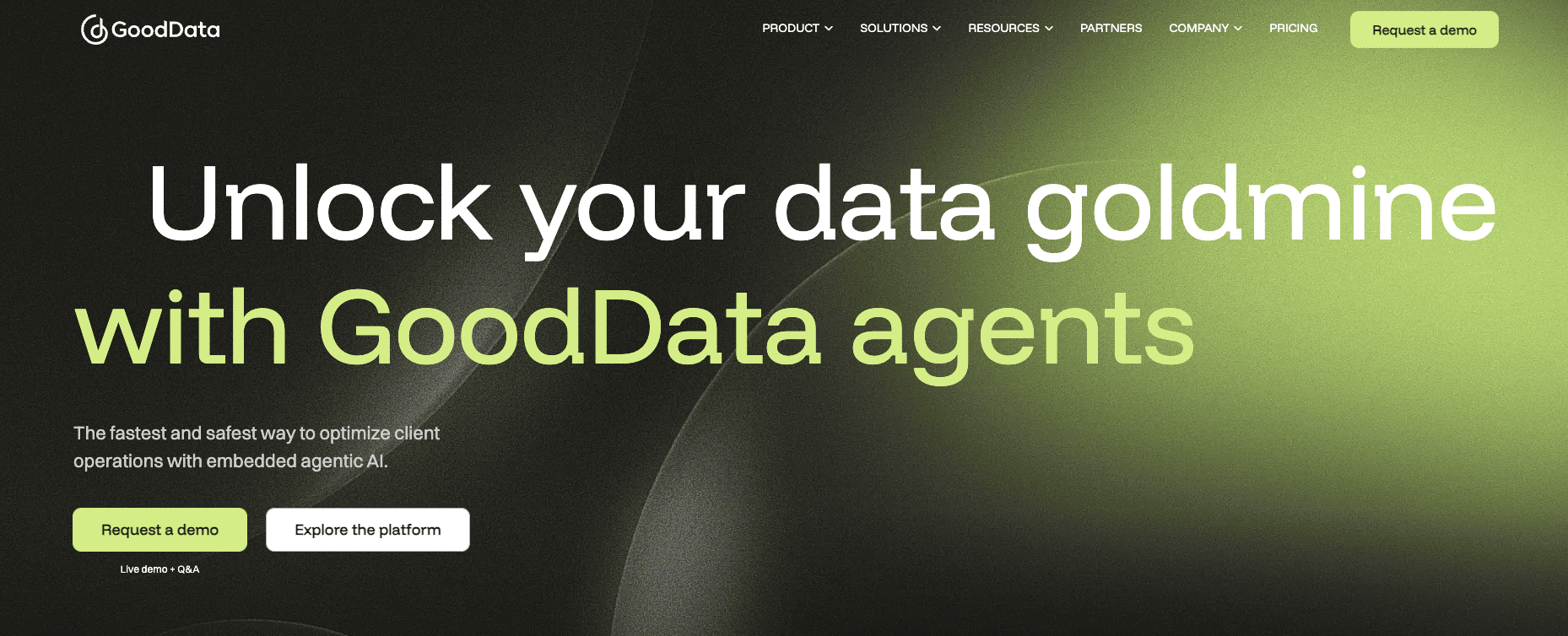
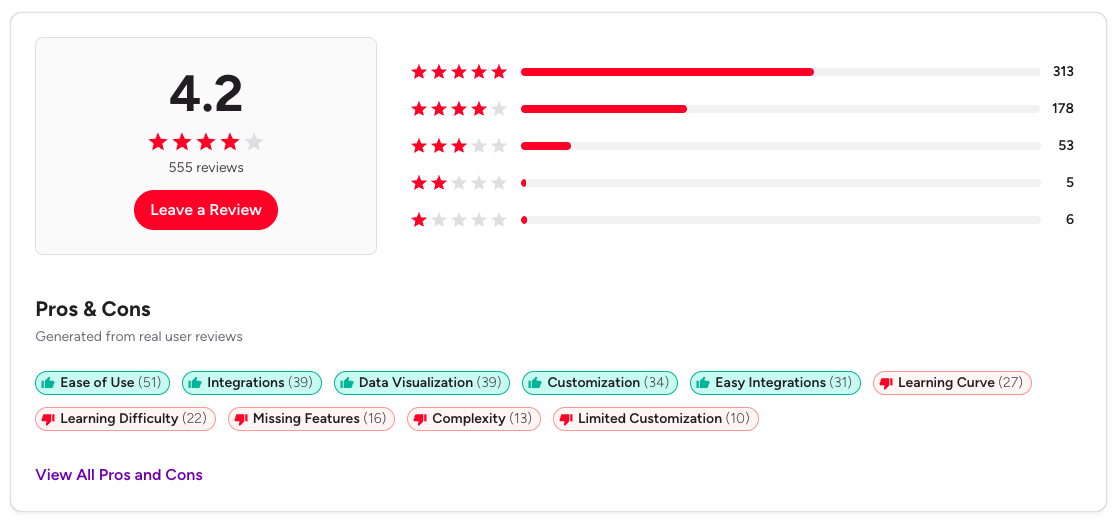
While GoodData offers robust features, users have noted some drawbacks. One significant downside is its initial setup complexity, requiring considerable consulting and best practices for proper data modeling. Additionally, GoodData has limited custom visualizations without custom development, and its subscription-based pricing can become unpredictable over time (TrustRadius).
The embedded analytics market reached $67.8 billion in 2025, with product teams increasingly demanding platforms that go beyond basic iframe embedding. If you're evaluating GoodData alternatives, you're likely facing one of several pain points: complex MAQL queries that slow down development, unpredictable workspace-based pricing, or limited white-labeling capabilities that make it difficult to deliver truly branded analytics experiences to your customers.
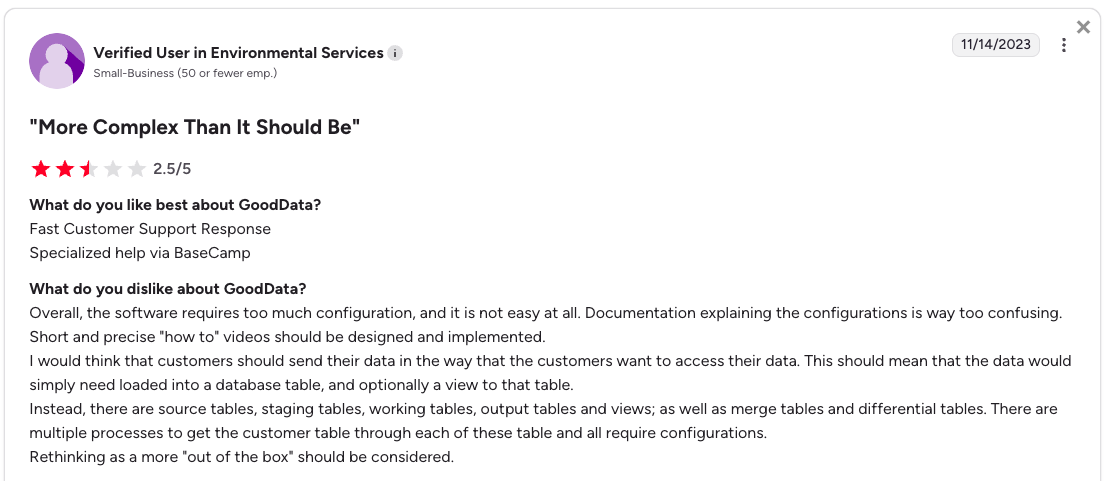
This guide compares the top 7 GoodData alternatives specifically for embedded analytics use cases. We'll cover everything from native embedding capabilities and AI-powered features to transparent pricing models and time-to-value for product teams.
Quick Navigation:
- Toucan – Best for engaging data experiences in SaaS products
- Luzmo – Best for rapid deployment with developer flexibility
- Databrain – Best for zero-ETL data lakehouse integration
- Sisense – Best for complex data modeling needs
- Looker – Best for Google Cloud enterprises
- Power BI Embedded – Best for Microsoft-first organizations
- Tableau – Best for advanced visualization requirements
Why Companies Are Looking for GoodData Alternatives in 2026
GoodData pioneered embedded analytics, but modern product teams face several limitations that drive them to explore alternatives.
You can check our Toucan vs. GoodData comparaison here.
Complex Setup and Steep Learning Curve
GoodData's proprietary MAQL (Multi-Dimension Analytical Query Language) requires significant training for both technical and business teams. Unlike SQL-based platforms, MAQL forces developers to learn a completely new syntax for metrics and calculations. According to G2 reviews, teams report 3-6 month onboarding periods before achieving productivity with GoodData's modeling approach.
Limited Customization for Customer-Facing Dashboards
While GoodData offers white-labeling, the customization depth falls short for modern embedded analytics needs. The platform relies heavily on iframe embedding, which creates UX friction and limits the level of integration possible with your application's UI. You cannot fully control the look, feel, and behavior of embedded components to match your product's design system.
Unpredictable Pricing Model
GoodData's workspace-based pricing becomes expensive as your customer base grows. Each workspace represents a tenant, and costs scale linearly with your customer count. Mid-market SaaS companies report monthly costs jumping from $5,000 to $50,000+ as they add customers, making unit economics challenging. This pricing structure penalizes your success rather than supporting it.
Lack of Priority Support on Lower Plans
Standard GoodData plans offer limited support, with critical issues taking days to resolve. For embedded analytics where downtime directly impacts your customers, this creates unacceptable risk. Enterprise support requires significant additional investment beyond already high base costs.
Key Criteria for Evaluating GoodData Alternatives
When evaluating embedded analytics platforms, prioritize these capabilities:
✅ Native embedding beyond iframe – React components, web components, or SDKs that integrate seamlessly with your application
✅ Full white-labeling capabilities – Complete control over branding, colors, fonts, and UI elements
✅ Transparent, predictable pricing – Per-user or flat-rate models that don't penalize customer growth
✅ AI-powered features – Natural language queries, automated insights, and AI assistants (table stakes in 2026)
✅ Fast time-to-value for product teams – Pre-built components and intuitive development experience
✅ Self-service for end users – Empower your customers to explore data without constant support requests
Top 7 GoodData Alternatives for Embedded Analytics
Toucan – Best for AI-Powered Embedded Analytics in B2B SaaS
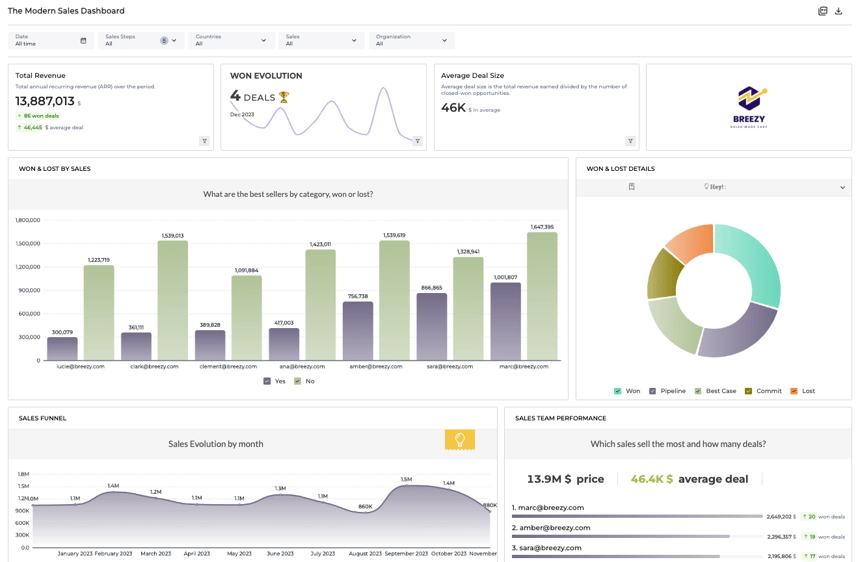
Best for: B2B SaaS companies embedding customer-facing analytics
Starting price: Custom pricing (typically $900/month)
Setup time: 2-4 weeks
G2 Rating: 4.7/5 (120+ reviews)
Why It's Better Than GoodData:
- Purpose-built for embedded analytics rather than adapted from internal BI tools
- Native AI-powered exploration allows end users to ask questions in natural language without understanding data models
- No-code environment eliminates the complexity of GoodData's MAQL while maintaining sophistication
Key Features:
Unlike GoodData, which serves both internal BI and embedded use cases, Toucan is laser-focused on companies embedding analytics directly into their products for customers. This specialization shows in every aspect of the platform.
The AI capabilities go beyond basic chatbots. End users can ask questions in natural language and receive relevant insights without needing to understand table structures, joins, or query languages. This dramatically reduces training requirements and support tickets compared to GoodData's technical approach.
The no-code workflow allows product teams to connect data sources, design dashboards, and deploy embedded analytics without writing SQL or learning proprietary query languages like MAQL. This accelerates development velocity by 40-60% compared to GoodData implementations, according to customer reports.
White-labeling capabilities are comprehensive and native to the platform. You have complete control over branding, colors, fonts, and UI elements, making embedded dashboards feel like a natural extension of your product rather than a bolted-on third-party tool.
Toucan helped us reduce time-to-insight for our customers from days to minutes. The AI exploration means users actually find value in the data instead of requesting custom reports from our support team.
Product Manager, Supply Chain SaaS
Pros:
- Exceptional focus on embedded use cases (not trying to be everything to everyone)
- AI-driven exploration that works for non-technical end users
- Fast deployment with minimal technical dependencies
- Strong customer success support throughout implementation
- Mobile-optimized experiences out of the box
Cons:
- Smaller ecosystem compared to enterprise BI tools
- Less suitable for ad-hoc SQL-based exploration (optimized for guided AI experiences)
Pricing:
Toucan offers usage-based pricing starting around $1,000/month depending on user volume and features. Unlike GoodData's workspace model that penalizes customer growth, Toucan's pricing scales more predictably with your business. Enterprise plans include dedicated support and advanced customization capabilities.
Best for:
B2B SaaS companies that need to embed sophisticated analytics directly into their products for customers. Particularly strong for supply chain, logistics, financial services, and healthcare SaaS where making complex data accessible to non-technical users drives product value. Ideal when you need analytics to be a core product differentiator, not just a reporting feature, and when you want to move fast without learning proprietary query languages or managing complex data modeling.
Luzmo – Best for Rapid Deployment with Developer Flexibility

Best for: Developer teams needing flexible embedding options
Starting price: $500/month (Starter), scales to custom Enterprise
Setup time: 1-2 weeks
G2 Rating: 4.5/5 (80+ reviews)
Why It's Better Than GoodData:
- Dual approach: Studio for no-code building + Flex SDK for developers who want programmatic control
- Luzmo IQ AI assistant integrated directly into embedded dashboards
- Fastest time-to-first-dashboard among enterprise solutions
Key Features:
Luzmo strikes an excellent balance between no-code ease and developer control. The Studio environment lets business users build dashboards visually, while the Flex SDK gives developers full programmatic control over every aspect of the embedded experience.
The platform's AI capabilities include Luzmo IQ, which allows end users to ask questions in natural language and receive instant visualizations. This dramatically reduces support burden by enabling self-service analytics without training.
Luzmo's component architecture supports both iframe and native React/Vue embedding, giving you flexibility to choose the right approach for different parts of your application.
Pros:
- Excellent developer experience with modern SDKs
- Transparent pricing with clear feature tiers
- Strong performance even with large datasets
- Active development with frequent feature releases
Cons:
- Smaller brand recognition than legacy players
- Some advanced customization requires Enterprise tier
Pricing:
Starter at $500/month includes core embedding features. Professional at $1,500/month adds white-labeling and priority support. Enterprise pricing (custom) includes Flex SDK, dedicated support, and advanced security features. Pricing is per-account, not per-workspace, making it more predictable than GoodData.
Best for:
Development teams that want to move fast without sacrificing flexibility. Excellent for startups and scale-ups building embedded analytics as a product differentiator. Particularly strong when you need both business user self-service and developer customization capabilities.
Databrain – Best for Zero-ETL Data Lakehouse Integration

Best for: Companies with data lakehouse architectures (Snowflake, Databricks)
Starting price: $800/month
Setup time: 1-3 weeks
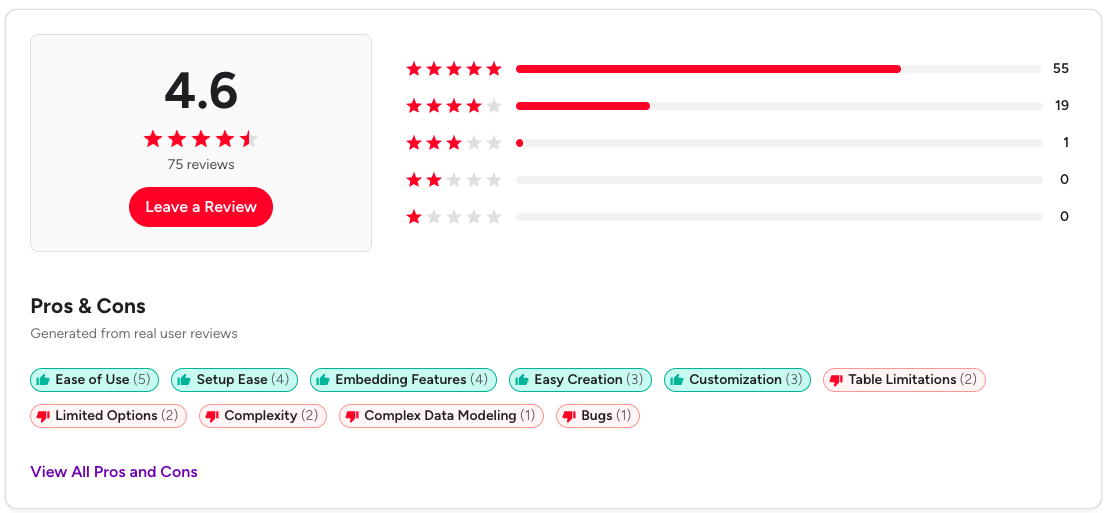
G2 Rating: 4.6/5 (45+ reviews)
Why It's Better Than GoodData:
- Zero-ETL approach connects directly to your data lakehouse without copying data
- Web components architecture for framework-agnostic embedding
- AI Summary feature automatically generates insight descriptions
Key Features:
Databrain's modern architecture aligns perfectly with data lakehouse strategies. Instead of requiring data replication into a separate analytics database, Databrain queries your Snowflake or Databricks instance directly. This eliminates ETL pipelines, reduces data sync issues, and improves data freshness.
The web components approach means you can embed Databrain in any frontend framework (React, Vue, Angular, or vanilla JavaScript) using standard HTML tags. No framework lock-in or complex SDK integration required.
Performance is exceptional due to intelligent query optimization and caching strategies that minimize lakehouse costs while maintaining sub-second response times.
Real User Review:
"Databrain cut our data pipeline complexity by 60%. We eliminated an entire ETL layer and our customers now see real-time data instead of day-old snapshots." – Data Engineering Manager, E-commerce Platform
Pros:
- Modern architecture that aligns with current data stack trends
- Excellent performance with intelligent caching
- Lower total cost of ownership (no data replication infrastructure)
- Clean, developer-friendly API
Cons:
- Newer platform with smaller user community
- Requires data lakehouse architecture to maximize benefits
- Less extensive pre-built visualization library
Pricing:
Starts at $800/month for core features with reasonable scaling. Enterprise plans include advanced security, dedicated support, and volume discounts. Predictable per-user pricing model without workspace overhead.
Best for:
Companies that have invested in Snowflake, Databricks, or similar lakehouse platforms and want to leverage that investment for embedded analytics. Ideal for data-forward organizations where real-time analytics and architectural simplicity are priorities.
Sisense – Best for Complex Data Modeling and ElastiCube Performance
Best for: Enterprises with complex data integration requirements
Starting price: Custom (typically $10,000+/year)
Setup time: 4-8 weeks
G2 Rating: 4.3/5 (900+ reviews)
Why It's Better Than GoodData:
- ElastiCube technology handles complex joins and aggregations faster than traditional approaches
- Extensive connector library for legacy and modern data sources
- Mature embedded analytics capabilities with proven enterprise scale
Key Features:
Sisense excels at handling complex data environments with dozens of sources and intricate relationships. The ElastiCube in-chip technology processes queries orders of magnitude faster than traditional SQL approaches for complex analytical workloads.
The platform offers comprehensive embedding options including SDK, REST APIs, and iframe, with extensive customization through JavaScript APIs. This flexibility supports both simple and sophisticated embedded analytics use cases.
Sisense's Fusion platform (their modernized offering) combines traditional BI capabilities with AI-driven insights and automated data preparation.
Pros:
- Proven at enterprise scale with major customers
- Exceptional performance for complex analytical queries
- Comprehensive security and governance features
- Strong technical support organization
Cons:
- Higher price point than newer alternatives
- Steeper learning curve for administrators
- Longer implementation timeline
- UI feels less modern compared to newer platforms
Pricing:
Enterprise-focused pricing starting around $10,000-50,000+ annually depending on scale and features. More expensive than GoodData but includes comprehensive support and proven enterprise capabilities.
Best for:
Large enterprises with complex data environments, strict security requirements, and budgets that prioritize capability over cost. Particularly strong in healthcare, financial services, and manufacturing where data complexity is high.
Looker (Google Cloud) – Best for Enterprises Already on Google Cloud
Best for: Organizations committed to Google Cloud Platform
Starting price: Custom (typically $3,000+/month)
Setup time: 6-12 weeks
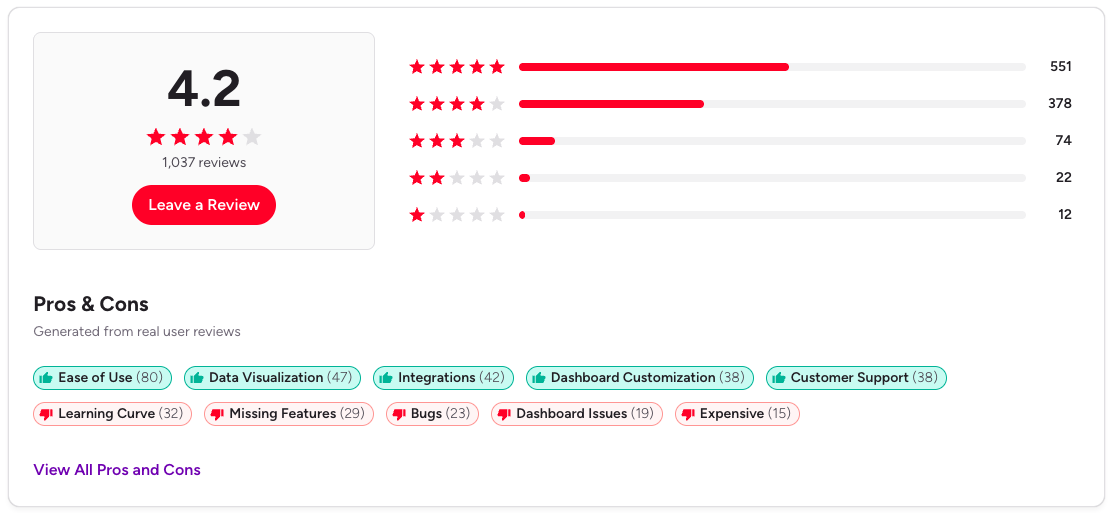
G2 Rating: 4.4/5 (1,800+ reviews)
Why It's Better Than GoodData:
- LookML modeling layer enables version-controlled, code-based analytics
- Deep Google Cloud integration with BigQuery, Gemini AI, and Cloud Fabric
- Proven enterprise scale with extensive governance capabilities
Key Features:
Looker brings software engineering best practices to analytics through LookML, a modeling language that treats analytics logic as code. This enables version control, testing, and collaboration workflows familiar to development teams.
The Google Cloud integration is unmatched. Looker queries run directly in BigQuery, leveraging its massive compute power. The 2026 integration with Gemini AI brings generative capabilities directly into embedded dashboards.
Looker's embedded analytics supports both iframe and API approaches, with extensive customization options through the JavaScript SDK and REST API.
Pros:
- Best-in-class if you're committed to Google Cloud
- Strong developer experience for technical teams
- Excellent governance and security capabilities
- Integration with Google's AI capabilities (Gemini)
Cons:
- Requires significant technical expertise to maximize value
- Long implementation timeline
- Expensive, especially for smaller organizations
- Limited value if not using Google Cloud Platform
If you are looking for an alternative to Looker, this article can help you.
Pricing:
Looker pricing is custom and typically starts at $3,000+/month with costs scaling based on users and capabilities. Part of Google Cloud contracts for enterprise customers. Generally more expensive than GoodData but with Google Cloud ecosystem integration as the value driver.
Best for:
Enterprises deeply invested in Google Cloud Platform who want a unified data and analytics stack. Ideal for technically sophisticated organizations where analytics logic complexity justifies LookML's learning curve.
Power BI Embedded – Best for Microsoft-First Organizations
Best for: Organizations standardized on Microsoft 365 and Azure
Starting price: $1/hour of capacity (can be $500-5,000+/month)
Setup time: 4-8 weeks
G2 Rating: 4.4/5 (1,200+ reviews)
If you are looking for an alternative to Power BI, this article can help you.
Why It's Better Than GoodData:
- Copilot integration for AI-powered insights and natural language queries
- Seamless Microsoft ecosystem integration with Teams, SharePoint, Dynamics 365
- Massive user base with extensive community resources
Key Features:
Power BI Embedded leverages Microsoft's massive investment in enterprise analytics. The Copilot integration (2026) brings generative AI directly into dashboards, allowing users to ask questions and receive AI-generated insights based on organizational data.
The Azure integration provides enterprise-grade security, compliance, and governance. Single sign-on with Azure AD, row-level security, and comprehensive audit logging come standard.
Power BI's visualization capabilities are extensive, with hundreds of custom visuals available from the community marketplace.
Pros:
- Excellent value if already invested in Microsoft ecosystem
- Comprehensive visualization options
- Strong community and extensive documentation
- Enterprise-grade security and compliance
Cons:
- Capacity-based pricing can be unpredictable
- Embedding complexity higher than specialized platforms
- Occasional performance issues with large datasets
- Microsoft-centric approach may not fit all tech stacks
Pricing:
Capacity-based pricing starting at approximately $1/hour (roughly $500-5,000+/month depending on usage). Can be more cost-effective than GoodData for Microsoft-first organizations, but costs vary significantly based on usage patterns.
Best for:
Organizations heavily invested in Microsoft 365, Azure, and the Microsoft ecosystem. Particularly strong when you need to embed analytics in Microsoft applications like Teams or SharePoint. Less ideal for organizations seeking platform independence.

Tableau – Best for Advanced Data Visualization Needs

Best for: Organizations prioritizing visualization sophistication
Starting price: Custom (typically $5,000+/month for embedded use)
Setup time: 8-12 weeks
G2 Rating: 4.4/5 (2,100+ reviews)
Why It's Better Than GoodData:
- Industry-leading visualization capabilities with pixel-perfect control
- Massive community with extensive visualization templates and examples
- Proven enterprise adoption across industries
Key Features:
Tableau remains the gold standard for advanced data visualization. The platform offers unmatched control over chart types, colors, layouts, and interactions. For organizations where visualization quality is paramount, Tableau delivers.
The embedding capabilities have improved significantly with the Tableau Embedding API v3, offering better programmatic control and customization options. However, Tableau wasn't purpose-built for embedded use cases, which shows in the implementation complexity.
Tableau's massive user community means extensive resources, training materials, and pre-built visualizations for nearly any use case.
Pros:
- Best-in-class visualization capabilities
- Massive community and ecosystem
- Extensive training and certification programs
- Strong Salesforce integration (post-acquisition)
Cons:
- Not optimized for embedded use cases
- Expensive, especially at scale
- Complex embedding implementation
- Performance can be inconsistent with large datasets
Pricing:
Enterprise embedded pricing starts around $5,000+/month and scales significantly with usage. Generally more expensive than GoodData, with costs justified primarily by visualization sophistication.
Best for:
Organizations where visualization quality is the primary decision factor and budget isn't a constraint. Strong in industries like financial services where complex, customized visualizations are standard requirements. Less ideal for teams prioritizing rapid deployment and embedding simplicity.
GoodData Alternatives - Comparison Table
Ready to see how Toucan compares? Start your evaluation today to discover how embedded analytics can become your product's competitive advantage.
FAQ
.png?width=112&height=112&name=portrait_agathe_face%20(1).png)