Freelance data analyst vs a managed analytics service: which fits a company with no data team?

Alim Goulamhoussen
Publié le 01.10.26
8 min
You have no data team, and the numbers are starting to hurt. Reports disagree. The board deck takes two days. Someone suggests the obvious fix: find a freelance data analyst on a marketplace and get it sorted in a few weeks.
That can work. It can also leave you, three months later, with dashboards nobody maintains and a freelancer who has moved on to the next client.
This guide compares a freelance data analyst with a managed analytics service, side by side. What each one covers, who runs things after launch, and when each one is the right call.
TL;DR
A freelance data analyst sells you hours of skilled work for a defined engagement. A managed analytics service sells you an outcome: a custom data app, built, run, governed and improved for as long as you use it. Pick a freelancer for a scoped, one-off job you can manage yourself. Pick a managed service when dashboards run your business and nobody on your side can own them.
- A freelancer builds well. Continuity after the engagement is the weak point.
- Without a data team, someone still has to brief, review and manage the freelancer. Usually that is you.
- A managed service keeps the context, the definitions and the upkeep on its side.
What is the difference between a freelance data analyst and a managed analytics service?
A freelance data analyst is an independent professional you hire for a defined engagement, usually by the hour, the day or the project. They build what you scope, then the engagement ends. A managed analytics service is a provider that builds a custom data app on your data, runs it, governs the metrics and permissions, and ships changes on request, for as long as you use it.
The difference is not skill. A good freelancer can be excellent. The difference is what you are buying.
With a freelancer, you buy time. You decide what gets built, you review it, and you own what happens next. With a managed service, you buy a result that stays running. The provider owns the building, the upkeep and the accountability for the numbers.
If you want the full definition of the second option, see what is a managed analytics service?
What does a freelance data analyst actually deliver?
Usually, exactly what was in the brief. That is the strength and the limit.
A typical engagement covers:
Connecting a few sources. Your CRM, your accounting tool, a few spreadsheets.
Building dashboards. In the BI tool you already pay for, or one they recommend.
One-off analysis. A churn deep dive, a pricing review, a cohort study.
What a typical engagement does not cover, unless you scope and pay for it:
Running it next quarter. Refreshes that fail, sources that change, a new product line to add.
Governance. One written definition per metric, and permissions per person.
Availability. A freelancer has other clients. Your urgent fix joins their queue.
Accountability. Once the work is delivered, nobody signs off on the next number.
None of this is a criticism of freelancers. It is how the model works. You are renting expertise, not handing off ownership.
Freelance data analyst vs managed analytics service: side by side
Both can get you dashboards. They split on who manages the work, and who is still there in six months.
| Freelance data analyst | Managed analytics service Toucan Crew |
|
|---|---|---|
| What you buy | Hours or a fixed project | A custom data app, built and run for you |
| Who scopes and manages the work | You | The provider. You brief the decisions |
| Who runs it after launch | Usually you, once the engagement ends | The Crew, continuously |
| Metric definitions | Often in their head or their queries | Written once in a governed semantic layer |
| Permissions | Whatever the BI tool allows, set once | Row-level security, maintained for you |
| Changes after launch | A new engagement, if they are available | Requested in the app, done within 24 hours |
| If they leave | The context leaves with them | The context stays with the service |
| Who signs the numbers | No one after delivery | A named Toucan Lead, every release |
| Time to a first result | After sourcing, vetting and onboarding | First version of the app in 48 hours |
| Cost model | Hourly, daily or per project | Fixed cost, a fraction of a hire or a consulting firm |
| Best for | A scoped, one-off build or analysis | Dashboards a team decides from every week |
Weighing a full-time hire as well? That comparison is in before you hire a data analyst: the managed alternative.
When is a freelance data analyst the right choice?
More often than a vendor will tell you. Go with a freelancer when most of these are true:
The job has an end. A pricing study, a one-time audit, a data cleanup before a fundraise.
Your data is simple. Two or three sources, little transformation, few users.
Someone on your side can manage them. They will brief, review and answer business questions every week.
Nobody will run decisions on it for months. If the output is read once, upkeep does not matter.
You want deep, ad-hoc analysis. A senior freelancer thinking hard about one question is hard to beat.
In those cases, a freelancer is fast, flexible and good value. Just scope the handover before you start (more on that below).
When does a managed analytics service make more sense?
When the dashboards stop being a project and start being how the business runs. The signs:
A team decides from it every week. Leadership, finance, sales ops. A broken number costs a meeting.
Nobody internal can manage a freelancer. No one can review SQL, challenge a model or set priorities.
Your data is spread across many systems. And nobody agrees on what "revenue" or "active customer" means.
Different people should see different data. And today you manage that by copying dashboards.
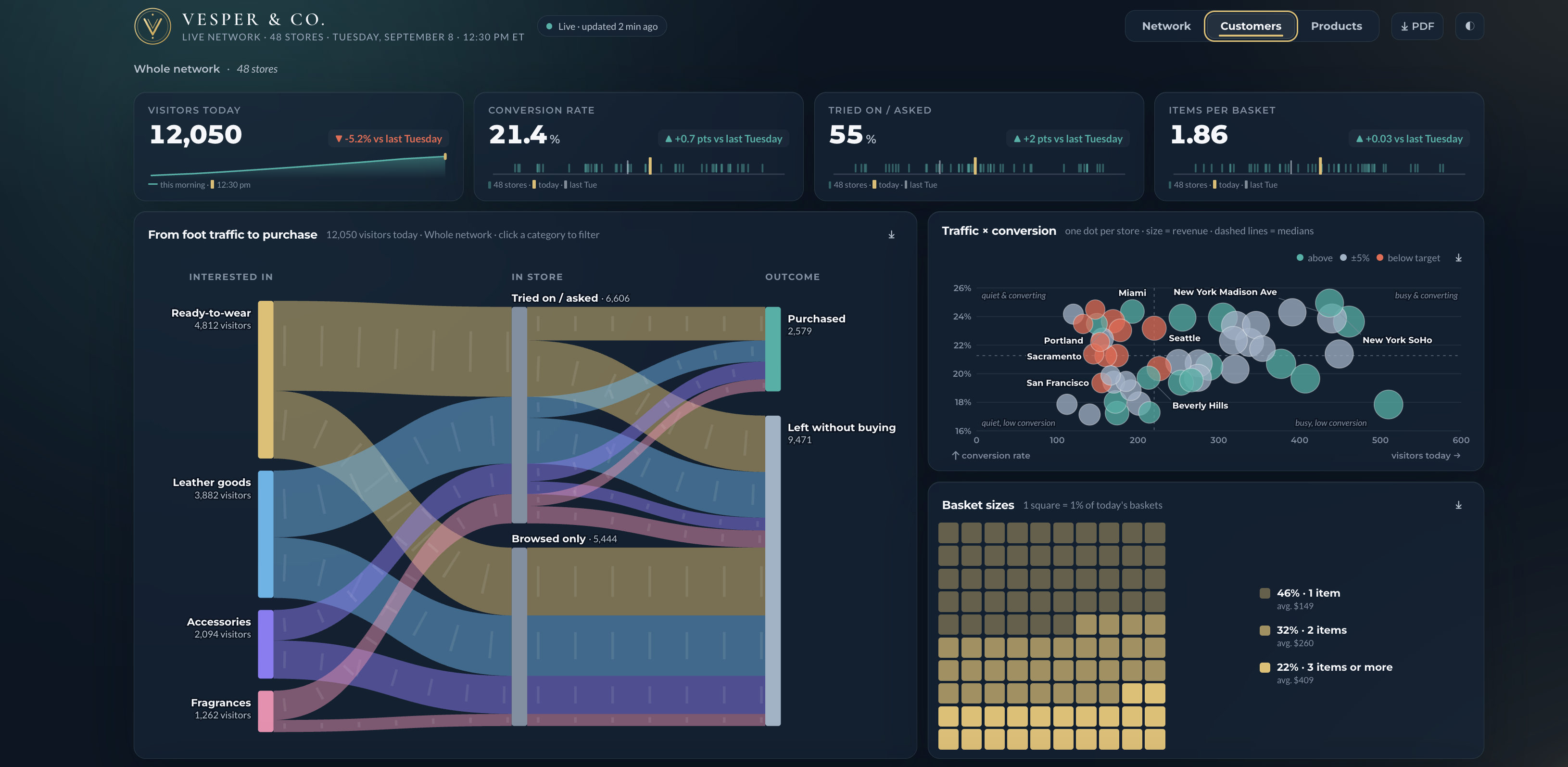
You need views a standard chart library cannot draw. Bespoke visuals tied to how your business decides.
Continuity matters more than flexibility. Losing one person should not mean losing your analytics.
That is the job a managed service is built for: it builds and runs a custom data app and keeps it right, week after week.
What happens to your dashboards when the freelance engagement ends?
This is where most freelance analytics projects quietly break. Not on delivery day. Three months later.
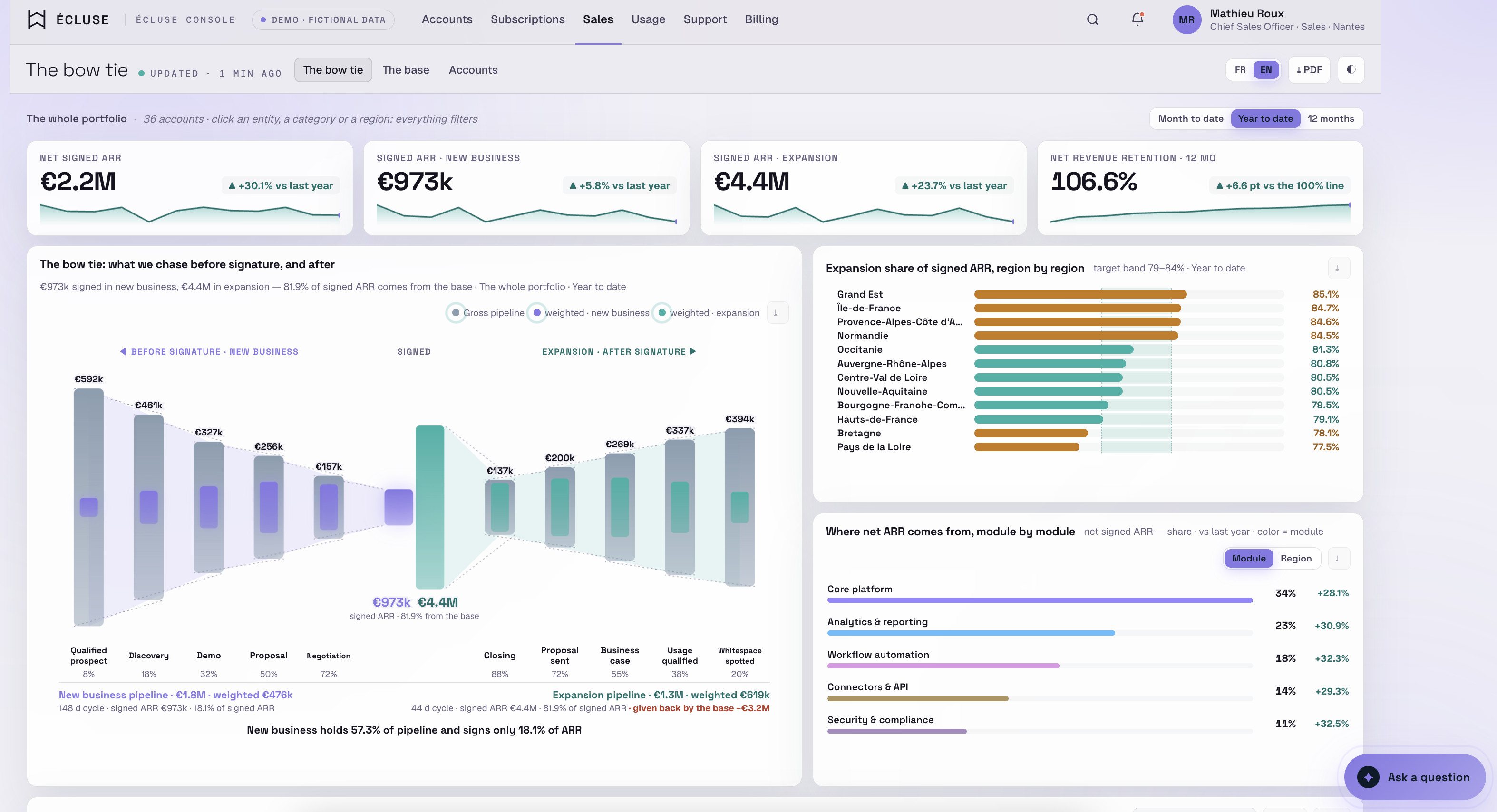
A source changes its schema. A new product line needs adding. The CFO asks why two reports show different revenue. The person who knows the answer is busy with another client, or gone.
Before you sign, ask yourself who will own each of these after the last invoice:
Who owns this after launch?
- Metric definitions, written down and agreed
- Data quality checks and failed refreshes
- Access rules: who sees which rows
- Fixes when a source or tool changes
- New requests from the business
- Sign-off on numbers that reach the board
If the honest answer to most of them is "nobody," a freelancer will hand you something you cannot keep. That is not their failure. It is a gap in the setup. We cover what that upkeep looks like week to week in business dashboards, built and run for you.
If you hire a freelancer, what should you put in the contract?
If a freelancer is the right fit, protect the handover from day one. Six things to ask for:
Everything in your accounts. Data sources, BI workspace and code live in your tools, not theirs.
Written metric definitions. One document listing every KPI and how it is calculated.
A handover session. Recorded, with someone from your team who will own the result.
A post-launch rate. What a fix or a small change costs once the project is closed.
A response time for breakages. In writing, even if it is "within a week."
A backup plan. Who can step in if they are unavailable for a month.
If you find yourself writing a long list of upkeep clauses, that is a signal. You are trying to buy a managed service from one person.
Is a freelance data analyst cheaper than a managed analytics service?
On the invoice, often yes, at first. Over a year, it depends on what you count.
A freelancer's rate covers their hours. It does not cover your hours: writing briefs, reviewing work, answering questions, chasing fixes. It does not cover the rework when a new freelancer has to understand what the last one built. And it does not cover a wrong number reaching a decision because nobody was checking.
A managed service is priced to replace a role, as a fixed cost. The fair comparison is not one invoice against another. It is the full cost of getting trusted numbers every week, including the time your own team spends. We break that calculation down in the hidden cost of DIY AI analytics.
How does Toucan AI Crew replace the freelancer?
Toucan AI Crew is a managed analytics service: a supervised crew of AI agents, backed by Toucan's data experts, that builds and runs your custom data apps, with a first result in 48 hours and a human who signs every release.
Kickoff. You brief the Crew on the decisions your team needs to make. No sourcing, no vetting, no spec to write.
48 hours. The first version of your app, on your data.
Day 30. The app is in production, on a governed semantic layer with row-level security.
From then on. You ask for changes directly in the app, in plain language. Requests are unlimited, and each one is done within 24 hours.
The AI agents do the building and running, including bespoke views a standard BI tool does not offer. A named Toucan Lead reviews and signs every release. The Crew keeps the context of your business from one change to the next, so nothing walks out the door when a person moves on.
It costs a fraction of a hire or a consulting firm. See how the Crew works and how pricing works, or explore a live demo app built by the Crew.
So, freelancer or managed service?
Hire a freelancer for a job with an end, and someone on your side to manage it. Choose a managed service when your team decides from the numbers every week and nobody internal can own them.
Most companies without a data team are in the second case. They just find out three months after the freelancer leaves.
Let's talk. Tell us the decisions your team needs to make. We will show you the first version of your app in 48 hours.
For the wider picture on where AI fits, see AI for data analysis: LLM, tool, or team?
Frequently asked questions
Should I hire a freelance data analyst or use a managed analytics service?
Hire a freelancer for a scoped, one-off job that someone on your side can manage. Use a managed analytics service when a team decides from the dashboards every week and nobody internal can own them. The service builds, runs and governs the app for as long as you use it.
What happens to my dashboards when the freelancer leaves?
Unless you planned the handover, upkeep comes back to you. Fixes when a source changes, new requests and metric definitions all need an owner. Ask for written definitions, assets in your own accounts and a post-launch rate before you sign.
Is a freelance data analyst cheaper than a managed service?
The invoice is often lower at first. The full cost includes your own time briefing and reviewing, rework when a new freelancer takes over, and the risk of an unchecked number. Toucan AI Crew is a fixed cost, a fraction of a hire or a consulting firm.
Can a freelancer maintain my dashboards long term?
Some do, on a retainer. The limits are availability, since they have other clients, and continuity, since the context sits with one person. A managed service keeps the context and the upkeep on its side, with a named person accountable for each release.
How fast can a managed service deliver compared with a freelancer?
With Toucan AI Crew, the first version of your app lands in 48 hours after kickoff, and the app is in production at day 30. Changes you request in the app are done within 24 hours. A freelancer starts after sourcing, vetting and onboarding.
Do I need anyone internal with a managed analytics service?
You need someone who owns the decisions, not the data work. A business lead briefs the Crew, reviews what ships and asks for changes in plain language, directly in the app. No SQL, no spec to write and no freelancer to manage.